

Grocery Placement: Why Salt Gets the Bottom Shelf
Noise 13 is in the business of telling salty brand stories as part of A Dash Of, so we've been paying attention to where salt lives in retail, and how artisanal salt makers can elevate their presence.

The Grocery Store Salt Conundrum
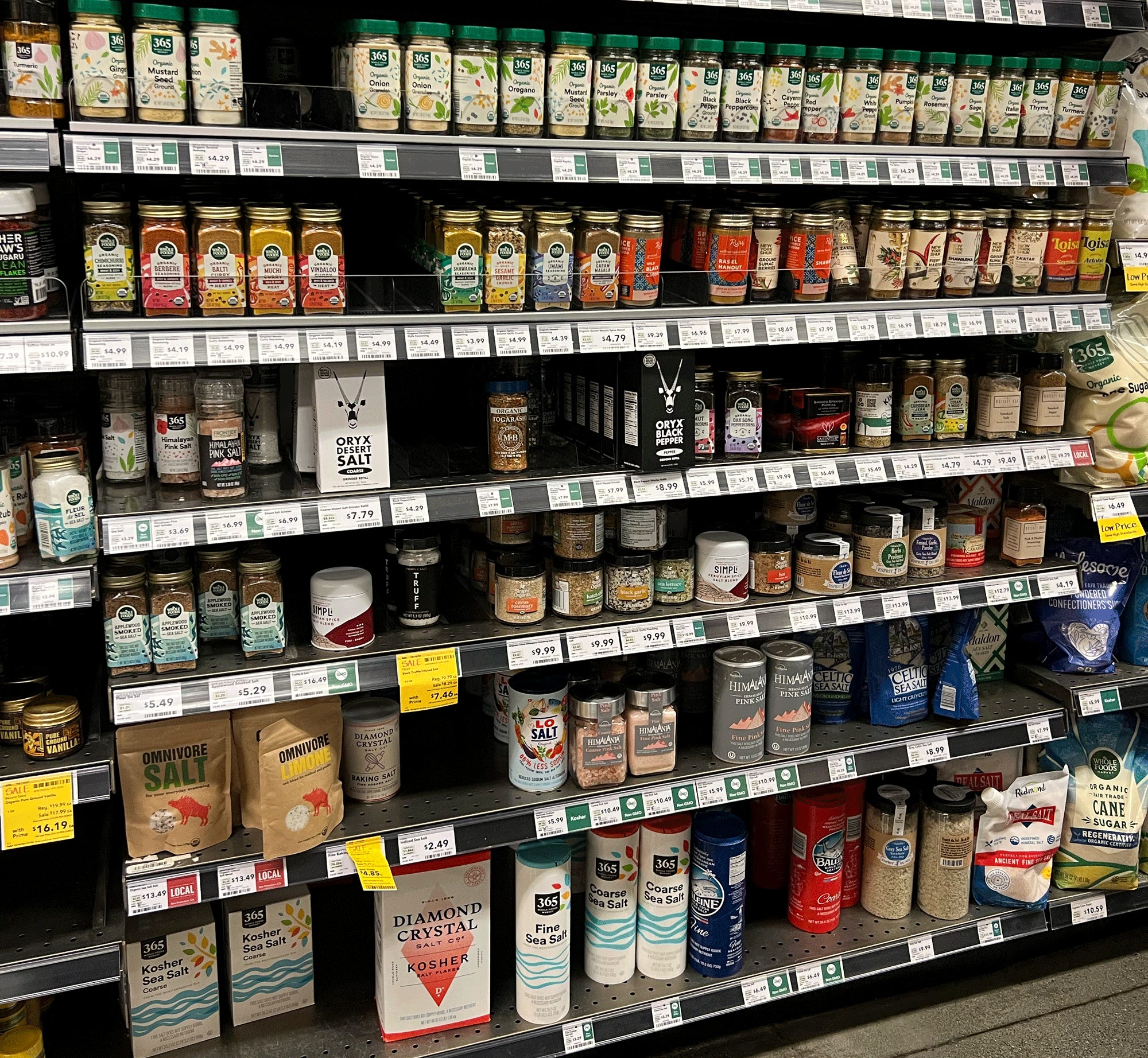
Walk down any grocery store spice aisle, and you'll notice a pattern: salt, despite its culinary importance, is almost always placed on the bottom shelves. The eye-level space is reserved for more profitable spice blends, exotic seasonings, and specialty products with higher margins. As consumers become more culinary-savvy and interested in premium ingredients, this positioning presents both challenges and opportunities for artisanal salt makers.
This placement isn't accidental. Retail shelf positioning follows careful planning by merchandisers:
Product Margins - Higher-margin items get prime real estate at eye level
Weight and Bulk - Heavier items (like salt containers) are placed lower for ease of handling
Purchase Frequency - Staples that shoppers will search for regardless of placement
Brand Agreements - Major manufacturers often pay for specific shelf placement
Salt, a relatively inexpensive staple with modest margins, naturally falls to the bottom of this hierarchy. Grocers know that consumers will bend down to find salt if they need it, while reserving eye-level space for impulse purchases and specialty items they want to promote.
Brand Representation: The Big Players vs. Artisanal Options
The salt options in most mainstream grocery stores are surprisingly limited, typically featuring:
Morton's table salt and kosher salt
Diamond Crystal kosher salt (in some regions)
Store-brand table salt
Staple brands like Lawry’s, McCormick, or other major players
Perhaps a token sea salt or Himalayan pink salt option
Smaller, artisanal salt makers are conspicuously absent from most mainstream grocery shelves for a few reasons:
Distribution challenges for smaller producers
Shelf space economics that favor established brands
Consumer education gaps about salt varieties and their uses
Lower turnover for specialty products
Price sensitivity in a category many consumers view as a commodity
Where Artisanal Salts Thrive
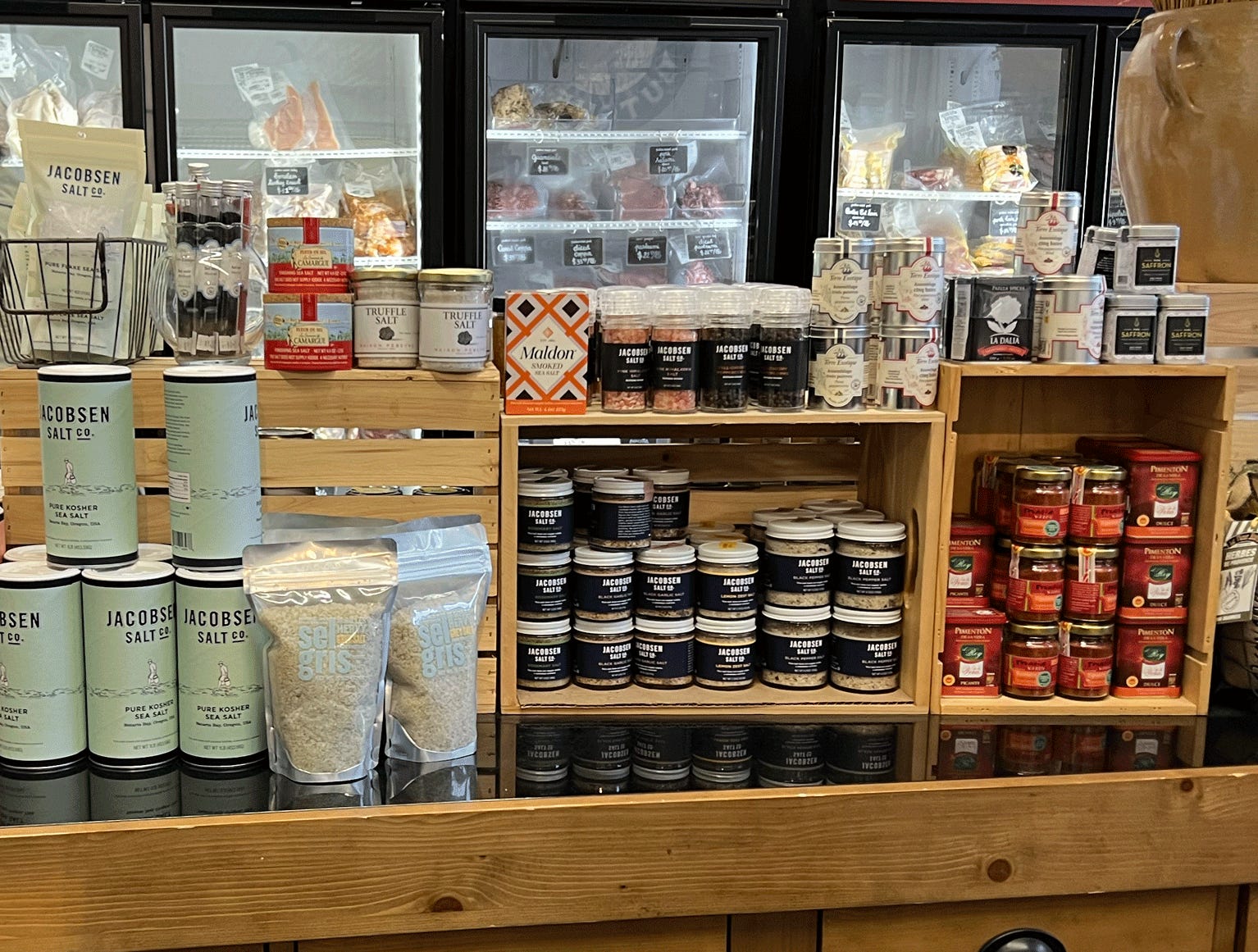
While mainstream grocery chains might not be the ideal venue for specialty salts, several retail environments have the space and the curious consumer:
Specialty food shops and gourmet stores
Farmers' markets with direct producer-to-consumer connections
Cooking supply stores catering to culinary enthusiasts
Online direct-to-consumer platforms (like A Dash Of)
Gift and tourism shops in salt-producing regions
High-end grocers like Bi-Rite and Rainbow in San Francisco, or other regional premium chains
These venues attract customers interested in culinary exploration and are more receptive to premium options.
Telling a Better Story at Retail
For artisanal producers looking to expand their retail presence, the challenge lies in effective storytelling within a limited space. We need to elevate these products from a commodity to featured ingredients. From a brand awareness and marketing view, we recommend:
Visual Distinction
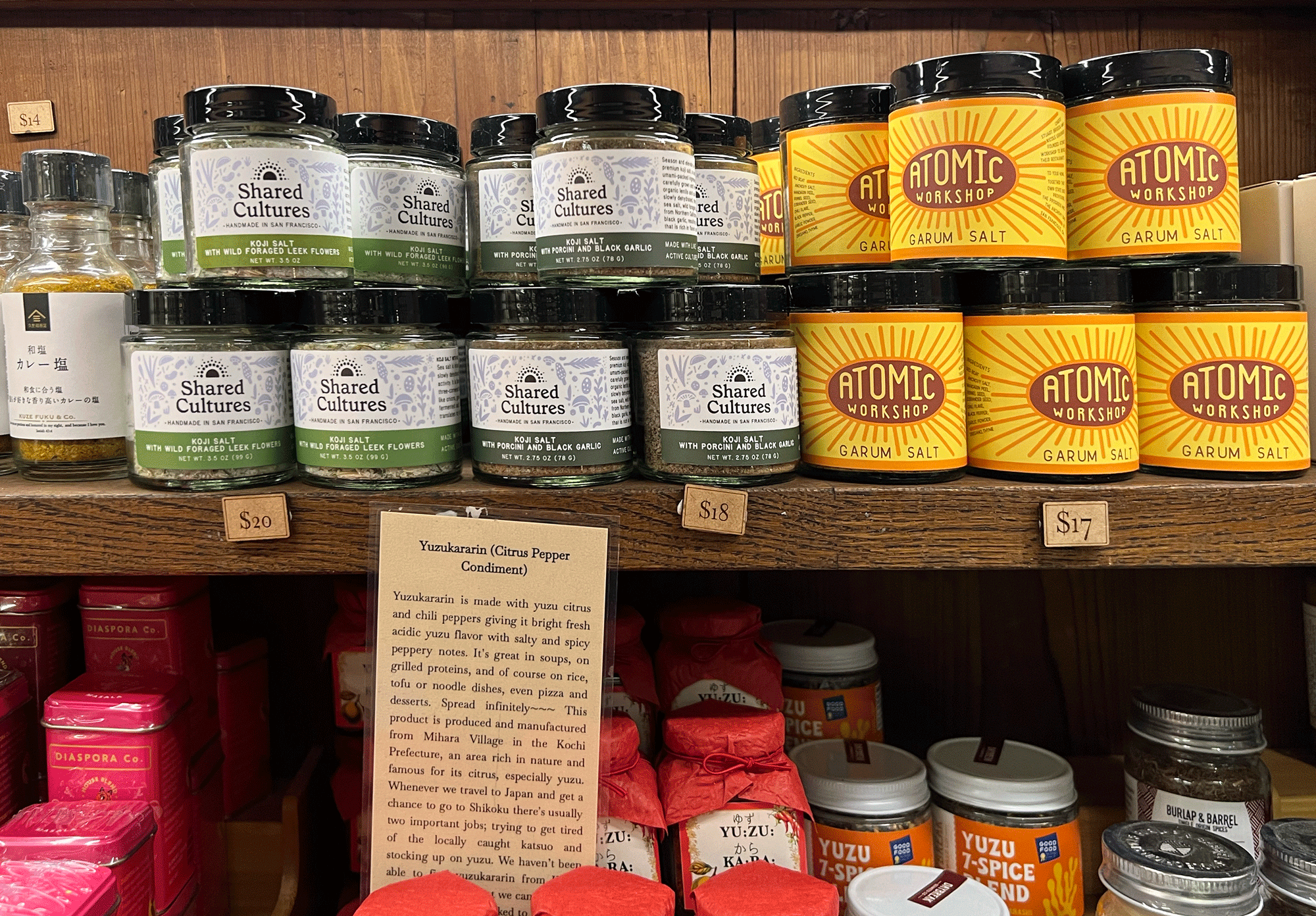
Distinctive packaging that breaks from the traditional
Clear materials in packaging to showcase unique structures and colors
Shelf talkers and displays that educate consumers about the origin and use
QR codes linking to video content about harvesting methods and terroir
Education-Forward Marketing
Usage suggestions prominently featured on packaging or materials
Pairing recommendations for specific dishes or ingredients
Origin stories that connect consumers to the brand’s provenance
Samplers that introduce consumers to the variety of flavors available
Strategic Partnerships
Chef endorsements from local or nationally recognized culinary figures
Co-marketing with complementary premium ingredients
Cooking school demonstrations and event sponsorships
Recipe collaborations with food bloggers and influencers
The Future of Salt at Retail
As consumer interest in ingredient quality continues to grow, we're seeing early signs of change in how it’s merchandised:
Some premium grocers are creating dedicated salt sections
Specialty salt finishing collections are appearing in gift sections
Online retailers are developing educational content around salt varieties (like the A Dash Of tasting education classes)
Cooking shows and food media are highlighting the importance of salt selection
For artisanal makers, success will not be in competing directly with commodities but in reframing their products as finishing touches, cooking tools, or even collectible culinary artifacts with unique stories.
Elevating the Essential
The current placement and presentation of salt in most grocery stores reflects an outdated view of this ingredient as a mere commodity, something customers need but a total afterthought. Forward-thinking retailers and salt producers have an opportunity to collaborate on new merchandising approaches that better reflect salt's culinary importance and diversity. We hope this continues to extend ot other forgotten ingredients too.
By focusing on education, origin stories, and unique applications, artisanal makers can help shift consumer perception from "just salt" to an appreciation a distinctive ingredient with terroir, craft, and purpose.
At Noise 13, we are using our A Dash Of brand to explore the intersection of consumer behavior, food production, and retail awareness in artisan brands. If you are looking for a consulting team to bring the best of your products to life, we’d love to hear from you.