

Lessons in Authenticity, Inclusion, and Brand Building
Takeaways from Cherry Bomb Jubilee LA. And ohhhhhh, I have never seen more outfits and accessories with cherries than that Sunday.


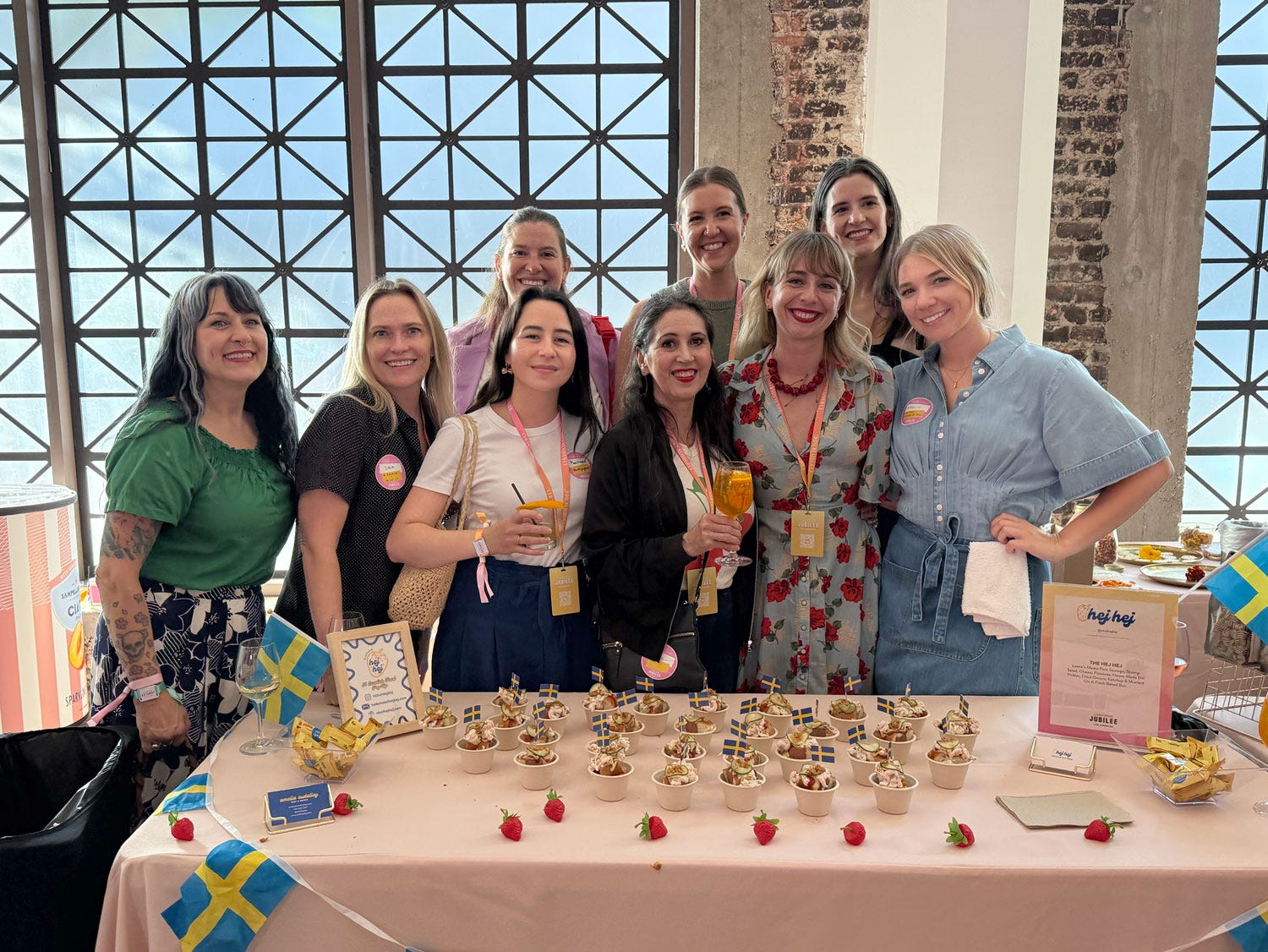
Last weekend, I attended Cherry Bomb Jubilee in Los Angeles with eight other women from the Proof Collective, a Bay Area-based group for women in the F&B industry. Walking into a room filled with hundreds of women who are shaping the future of food—as chefs, restaurateurs, founders, and creatives—was energizing and very, very cherry.
The Power of Embracing Your Whole Self
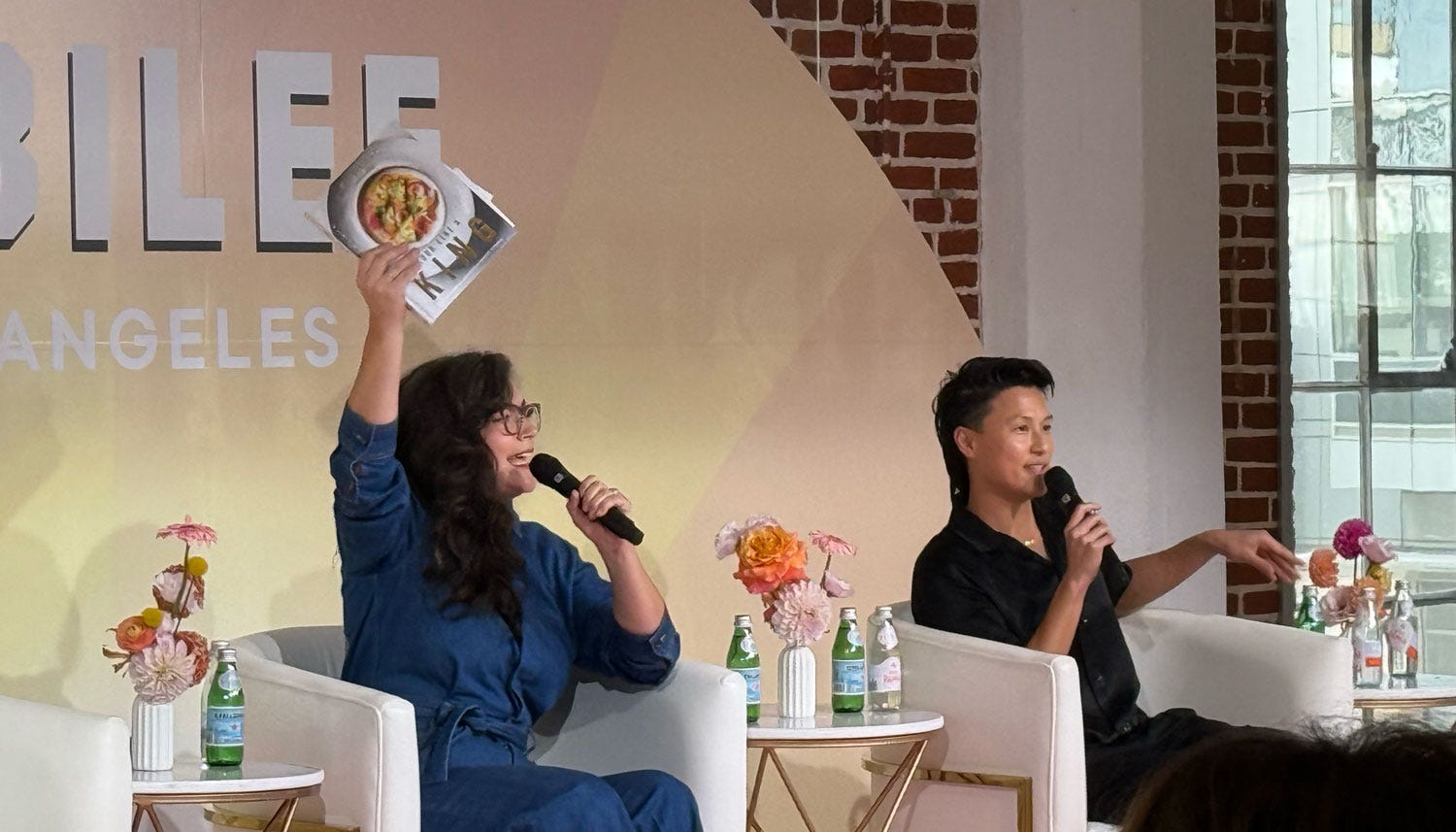
Melissa King‘s conversation with Ellen Bennett was a theme we hear often in food and in brand —find your uniqueness and go deep. Hearing her describe the journey from hiding her Chinese heritage in school lunchboxes to proudly making dumplings and congee on Top Chef was a masterclass in the cost of code-switching—and the freedom that comes when you stop.
“The second season, I do think you see a completely different person,” Melissa reflected. “I kind of found myself, my identity, and my confidence not just in cooking but just in who I was as a person.”
As brand strategists, we talk about authenticity constantly. But Melissa’s story reminded me that authenticity often requires unlearning shame first. Her new cookbook, “Cook Like a King”, five years in the making, stands as proof that the things we’re taught to hide are often our greatest strengths.
Representation Matters—In Every Body
Alyse Whitney delivered a raw, necessary talk about fat phobia in the food industry. She opened with a provocation: “Wagyu, toro, avocados, butter... Fat. These delicacies are valued for their fat... I share something in common with all of those wonderful foods. I’m fat. And that’s okay.” She was also wearing a baguette and butter dress, YES!
Her message about visibility was powerful: “Instead of hiding my body in baggy dark clothing and being as invisible as possible to avoid attacks, I demand to be seen. And take up the space I deserve in full Technicolor, maximalist joyful glory.” As more and more people are trading food for GLP-1, telling them they are full, it’s a good reminder to make all these choices for YOU, not anyone else.
When we, as Noise 13, build brand systems, design spaces for enjoying food, and tell stories about what matters to a company, we make choices about who gets to be visible. Those choices have consequences for humans that we have to take into account. Let’s all have more humanity and empathy for what others need.
The Reality of Building Food Brands
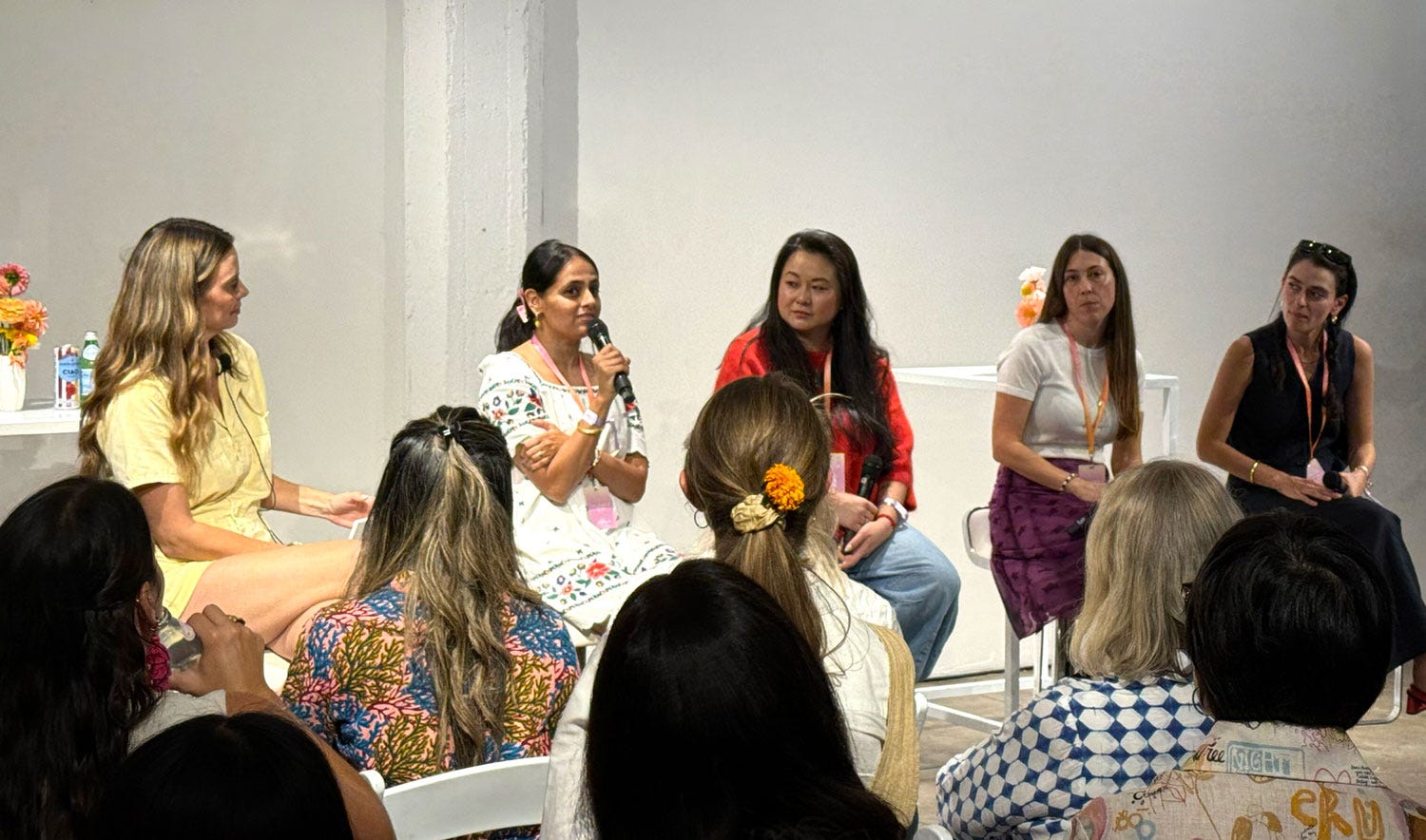
The “Shelf Life” panel brought together founders who’ve built some of the most distinctive brands in food: Aishwarya Iyer (Brightland), Jing Gao (Fly By Jing), Laura O’Neill (Van Leeuwen), and Becca Millstein (Fishwife). Their honesty about the challenges of building these businesses was refreshing.
The conversation about branding was particularly relevant to the work we do at Noise 13. Each founder approached their visual identity system differently, but they all understood that branding isn’t decoration—it’s strategic differentiation. Jing evolved Fly By Jing’s branding multiple times, starting with neon colors to challenge expectations, then refining it to tell her personal story on every jar. Laura described Van Leeuwen’s rebrand with Pentagram, stripping back to simple, premium packaging that stood out through restraint. Becca partnered with an illustrator from day one to create Fishwife’s maximalist aesthetic—a more affordable approach that kept the brand flexible.
“The most impactful branding has to come from the founder,” Jing emphasized. “I didn’t know exactly what I wanted to express. So we spent a lot of time together. I told them everything.” Yes, founders need to know what they want to express, but also be open to what is differentiated from the competition and relevant to their audience. A collaboration with a great branding team can help you set there, but it has to be owned and led by the founders to have the passion to carry it through.
Laura’s advice was equally sharp: “I would look at what your idea is and ask yourself, is it really differentiated? Because depending on how deep your pockets are, branding will only bring you so far.”
The fundraising discussion was brutally honest. Becca shared a hard lesson: “The biggest mistake I made early on in fundraising is I would meet an investor, and they would tell me that they were going to pass, but they would say, ‘but I’ll introduce you to two or three other people’... what I ultimately recognized was that people want to invest in things that their friends are investing in, not in the thing that they’re not.” All three ladies mentioned the importance of not giving away control. Don’t get overly excited, stay strong, and know your worth.
What I’m Taking Back to Our Work
As I think about the brands we build at Noise 13, a few things stayed with me:
Authenticity requires courage. It’s not just about telling your story—it’s about telling the parts of your story you’ve been taught to hide. That’s where differentiation actually lives.
Inclusion is an active practice. It’s not enough to say we value diversity. We have to examine who gets to take up space in the work we create, whose stories we prioritize, and whose expertise we seek out.
Branding is strategic, not decorative. The founders who succeed understand that visual identity, messaging, and positioning are business decisions, not aesthetic ones. They require deep founder involvement and clear differentiation.
Community matters. Being in a room with the Proof Collective women and hundreds of others building the future of food reminded me why we do this work. We’re not just building brands—we’re building the infrastructure for new voices to be heard.
Thank you to Kerry Diamond and the entire Cherry Bombe team for creating this space. And to my Proof Collective sisters who made the trip—these conversations continue.
Dava Guthmiller is the founder of Noise 13, a San Francisco-based brand strategy and design studio specializing in food and beverage brands.